Hampshire and Isle of Wight Rural Crime Event 2026
“We’ve got our EyesOn you”: PCC Donna Jones launches a UK-first rural crime app at Sparsholt College
“We’ve got our EyesOn you.”
That was the warning delivered by Police and Crime Commissioner Donna Jones to organised crime gangs and criminals targeting rural areas across Hampshire and the Isle of Wight, as she launched EyesOn, a new AI-supported app designed specifically for rural communities.
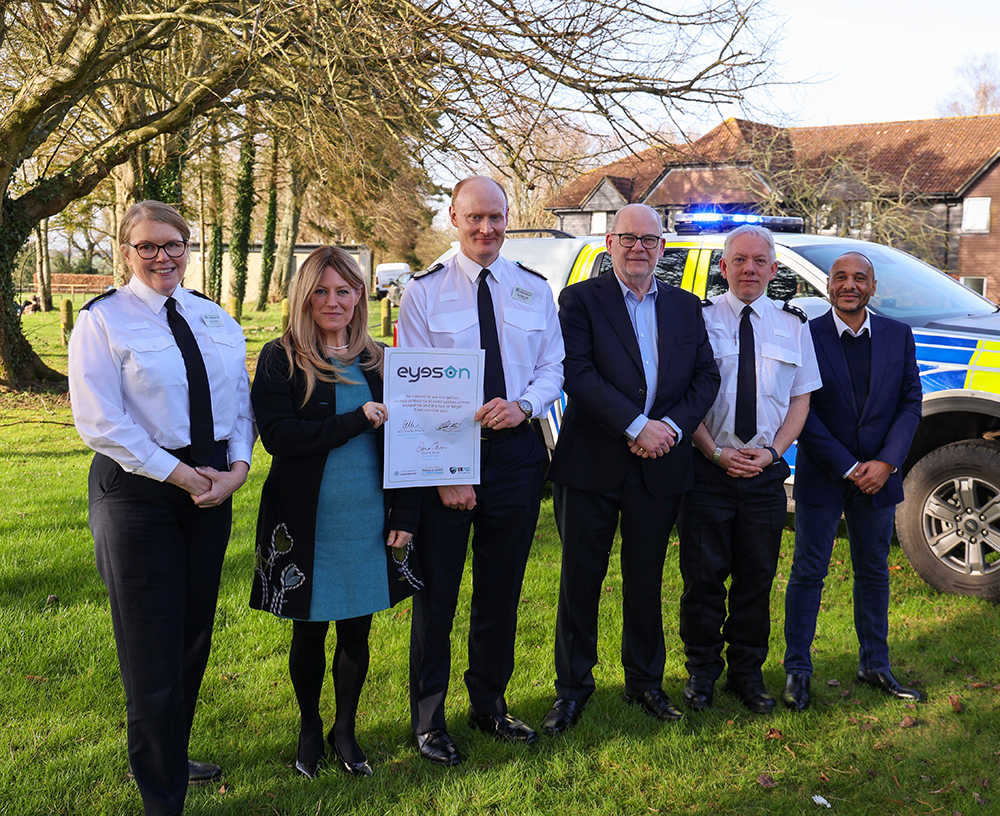
EyesOn was unveiled on 25 February 2026 at Sparsholt College near Winchester during the Hampshire and Isle of Wight Rural Crime Event. The day brought together farmers, landowners, rural business owners, wildlife organisations, local authorities and policing leaders to discuss the realities of rural crime, share what is improving on the ground, and set out the next steps to protect countryside communities and the rural economy.
Rural crime remains one of the PCC’s key priorities, and the launch of EyesOn marks a significant step forward in the way rural crime is reported, understood and addressed. EyesOn provides a digital route for rural users to file reports in a police-compliant format, alongside secure engagement tools that help communities stay connected to policing teams and to each other. Funding for the rollout has been provided by the PCC, with the app set to be free for approved users.
As Donna Jones said in the official announcement:
“EyesOn is a revolutionary new app which will be a game changer in the fight against rural crime for our countryside communities and local police.
Across Hampshire and the Isle of Wight, our beautiful countryside is all too often blighted by the damage caused by criminal activity. Organised gangs target these areas and businesses, and it is threatening to put many rural sites out of business.
I am delighted to be supporting and funding the EyesOn project, so that our rural communities can access it for free and share news, risks and concerns as well as images and CCTV footage of offences being committed and the damage left behind.
We have already seen great success with our retail-focussed app, UKPAC. Thanks to that initiative we are now one of the top police forces in the country for dealing with shoplifting offences. I look forward to seeing EyesOn have a similar impact on tackling rural crimes.
My message to the criminal gangs moving across our wonderful two counties is that we’ve got our EyesOn you, and we are coming after you.”
Event leadership and programme highlights
The event was hosted by PCC Donna Jones and compered by Deputy Police and Crime Commissioner Alex Rennie, who introduced speakers and kept the programme moving to time.
Donna Jones opened by welcoming members of the rural community who work across farming, land management and country life. She reflected on the past 12 months and set out a clear direction: more visible rural policing, stronger proactive disruption of organised offenders, and better technology to make reporting simpler and more effective.
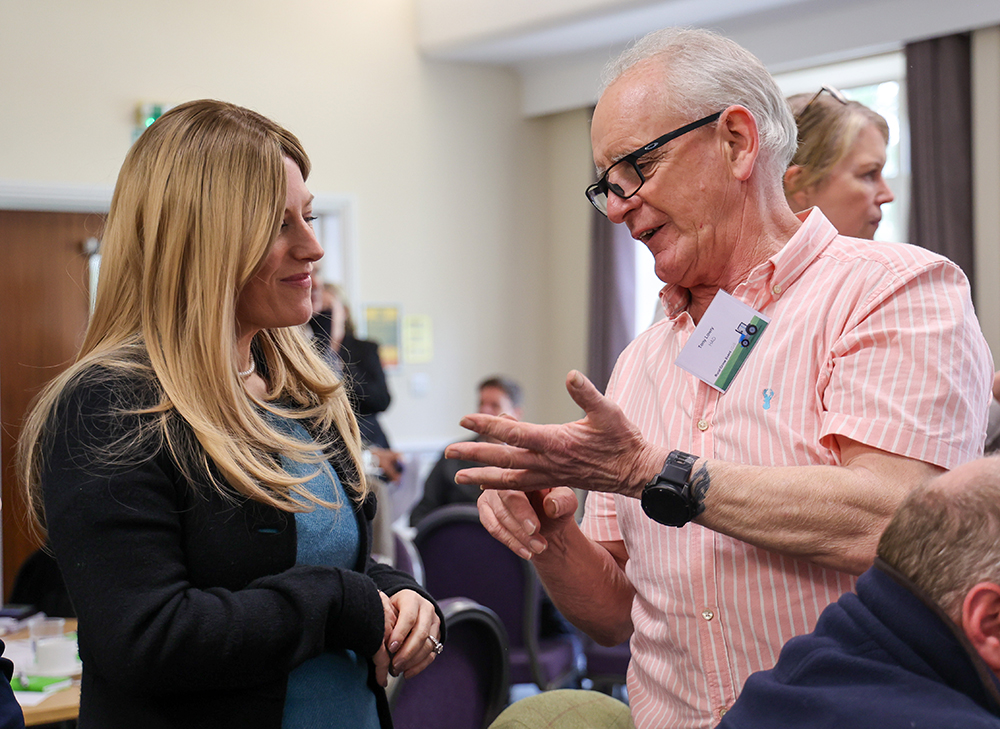
The agenda then moved through senior policing updates and partner contributions:
- Assistant Chief Constable Tara McGovern and Detective Chief Inspector Dal Andrews: strategic overview of rural policing and the Country Watch Rural Crime Task Force
- Chief Inspector Matt Gooding: firearms licensing changes
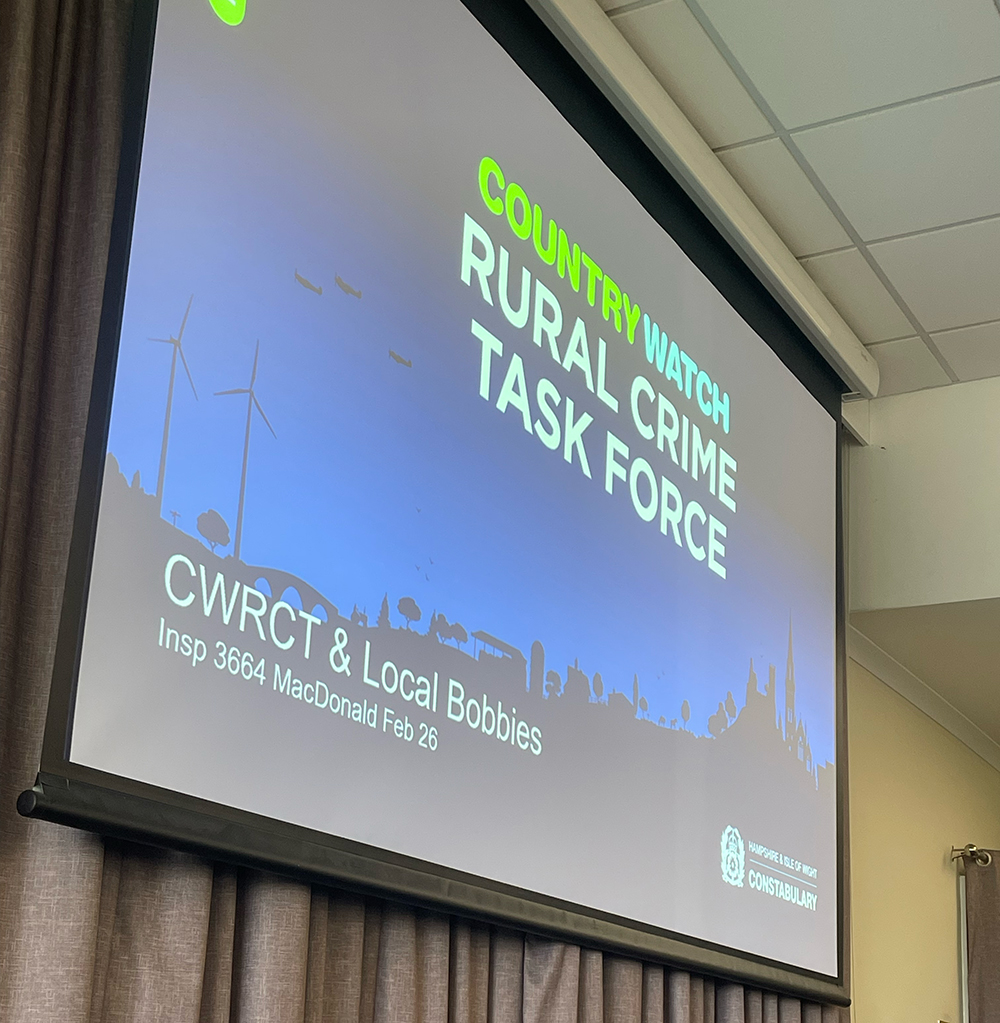
- Inspector Cath MacDonald: task force activity, prevention and the importance of local policing
- Matt Horne (Hampshire and Isle of Wight Fire and Rescue Service): rural safety and prevention
- David West (BASC): partner work in rural communities
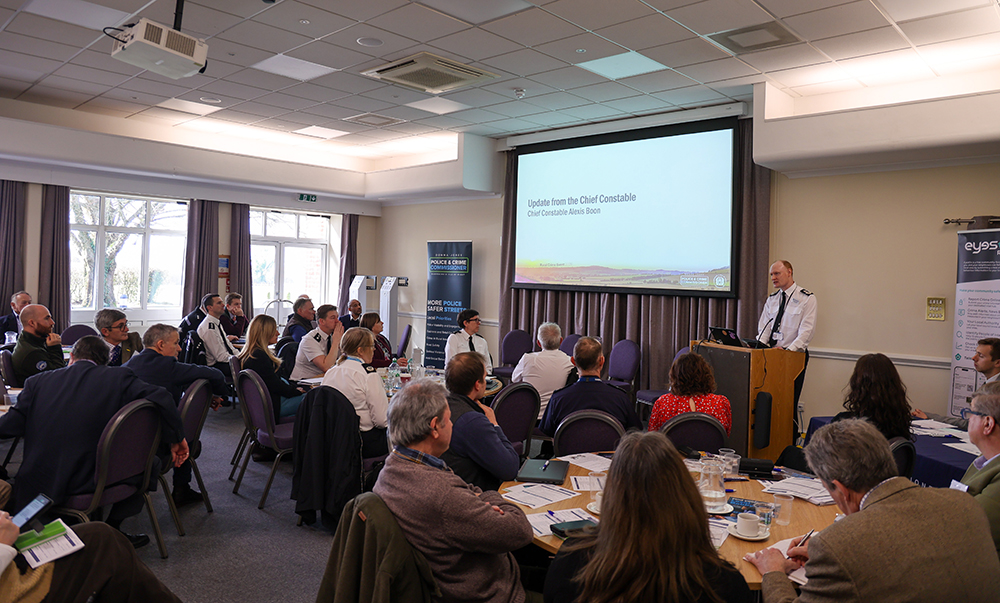
- Chief Constable Alexis Boon: keynote and priorities for the year ahead
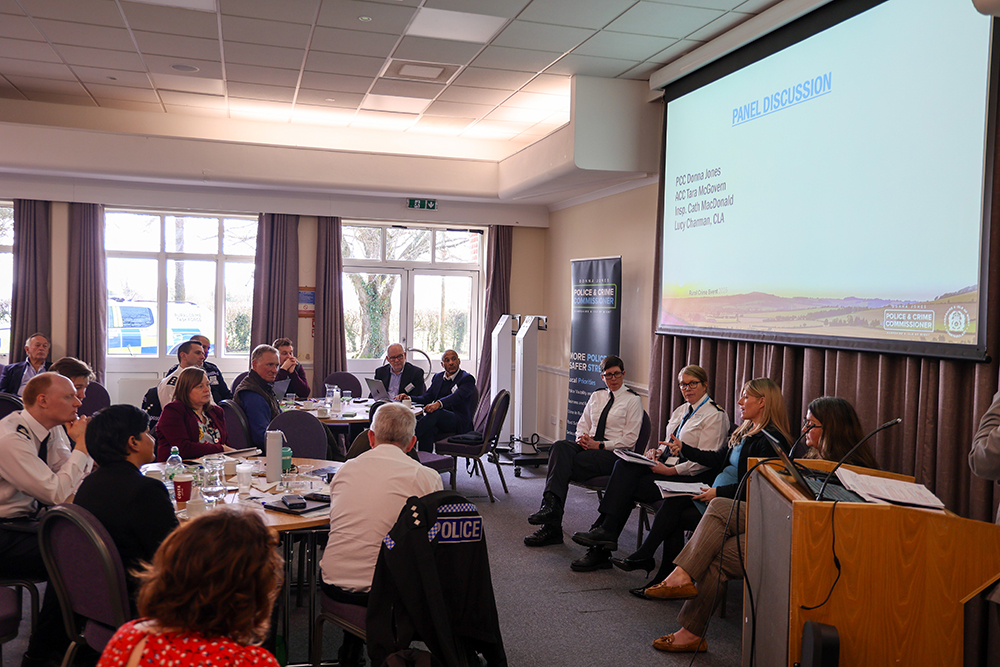
- Panel discussion led by Donna Jones with ACC Tara McGovern, Insp Cath MacDonald and Lucy Charman (CLA)
- Chief Inspector Marcus Cator: EyesOn deep dive with app and backend screenshots
- Ceremonial signing: Donna Jones, ACC Tara McGovern, CI Marcus Cator and Gareth Lewis (UKPAC), followed by closing remarks from the PCC
Why rural crime needs a tailored response
Rural crime is often dispersed and under-reported, yet its impact can be severe: financial loss, business disruption, land damage, clean-up costs, and intimidation in places where people can feel isolated. Hampshire and the Isle of Wight is a predominantly rural policing area, with around 75% of the force area covering countryside and agricultural land, so the policing challenge includes large distances and a wide range of rural settings.
The offences raised most often by rural communities and rural policing teams include theft of machinery and vehicles, fuel theft, burglary of outbuildings, livestock issues, hare coursing, poaching, fly-tipping and wider environmental offending, and anti-social behaviour in rural spaces. These crimes do not only affect balance sheets. They affect confidence, wellbeing and the sense of safety that rural residents should be able to take for granted.
Offending is also increasingly organised and mobile. Rural criminals can travel across county borders, target equipment “to order”, intimidate landowners, and exploit the road network. Nationally, NFU Mutual estimated rural crime cost the UK £44.1 million in 2024 (a 16.5% year-on-year decrease). Locally, the consistent message from policing leaders is that every report and every detail helps: vehicle descriptions, number plates, timing, direction of travel and precise locations are the building blocks of a stronger intelligence picture.
Donna Jones’ rural focus over the last 12 months
During the event, the PCC set EyesOn within a wider programme of delivery. Rural crime has been framed as a core priority, supported by a combination of visible policing, specialist capability and investment in tools that fit countryside conditions. This has included better-equipped rural vehicles, the use of specialist technology and stronger resourcing directed towards rural policing teams.
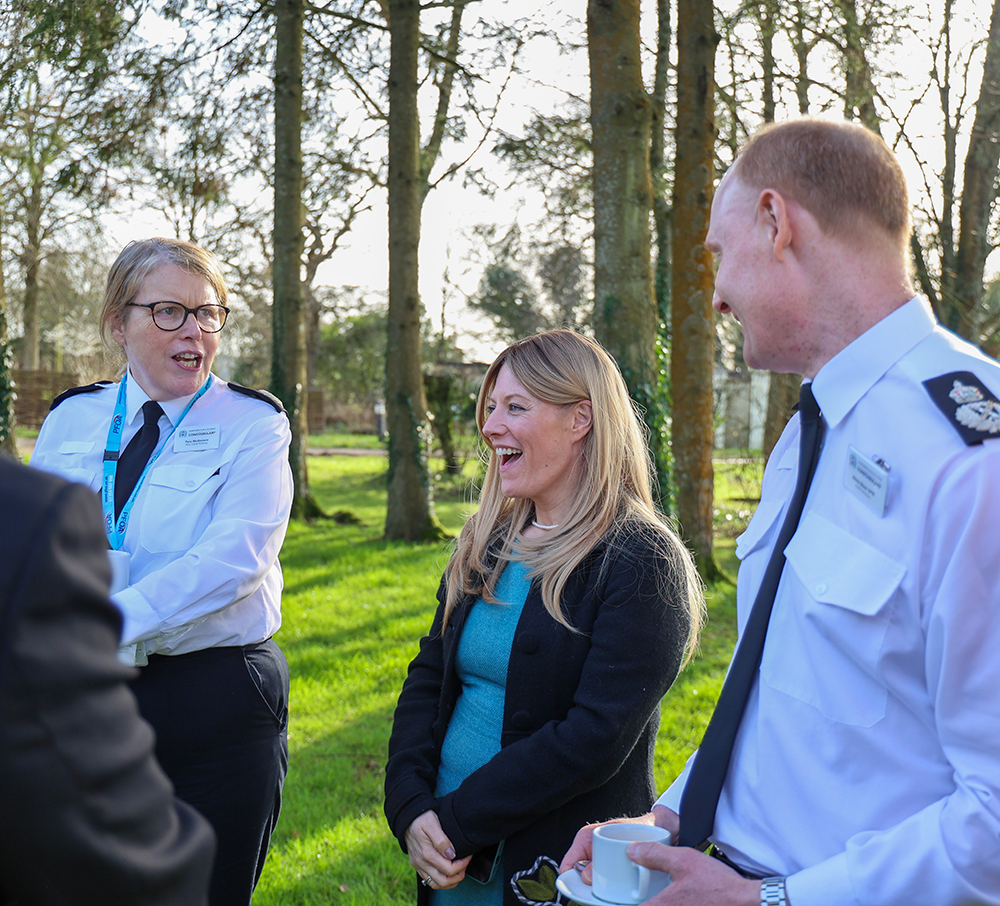
A consistent theme has been that rural communities want to know who their local officer is, see them in their area and contact them easily. The Local Bobby model—introduced to ensure communities have a named and contactable officer—has continued to expand, with additional Local Bobbies being placed into rural communities to strengthen visibility and everyday contact. Training and awareness have also developed, with rural engagement activity emphasising the financial impact of equipment and livestock theft, the pressures placed on rural businesses, and the importance of understanding rural patterns of offending.
The PCC has also prioritised listening to rural communities directly through engagement forums and partnership discussions. Those conversations have repeatedly surfaced the same point: rural residents are the eyes and ears of the countryside, and reporting mechanisms must be practical, quick and suited to rural life. EyesOn has been introduced to meet that need.
Country Watch Rural Crime Task Force: strengthened and proactive
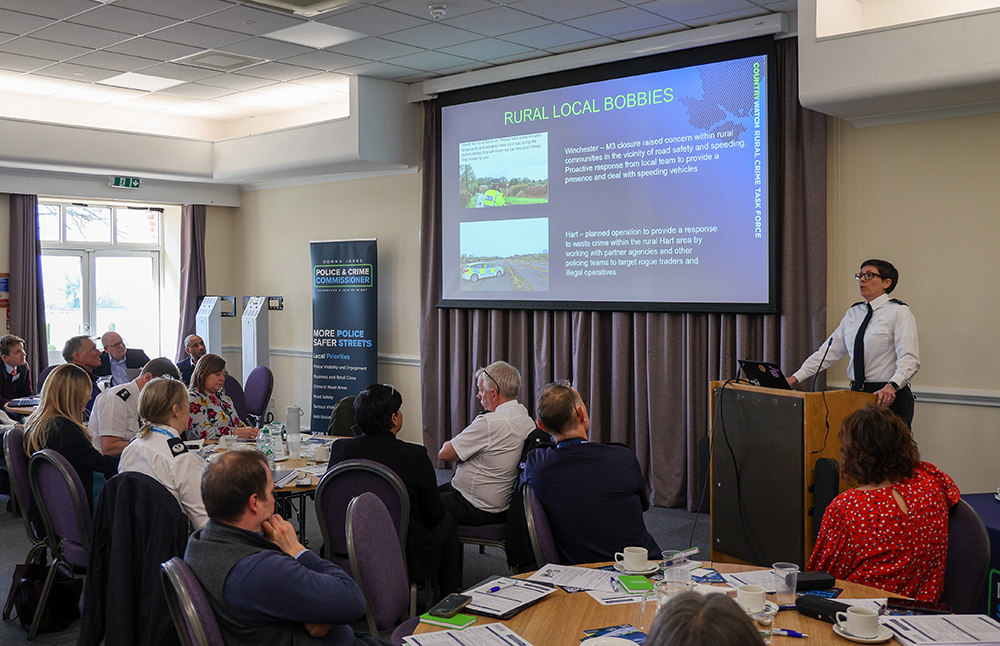
A major part of the Sparsholt programme was the strategic update on the Country Watch Rural Crime Task Force, presented by Assistant Chief Constable Tara McGovern and Detective Chief Inspector Dal Andrews.
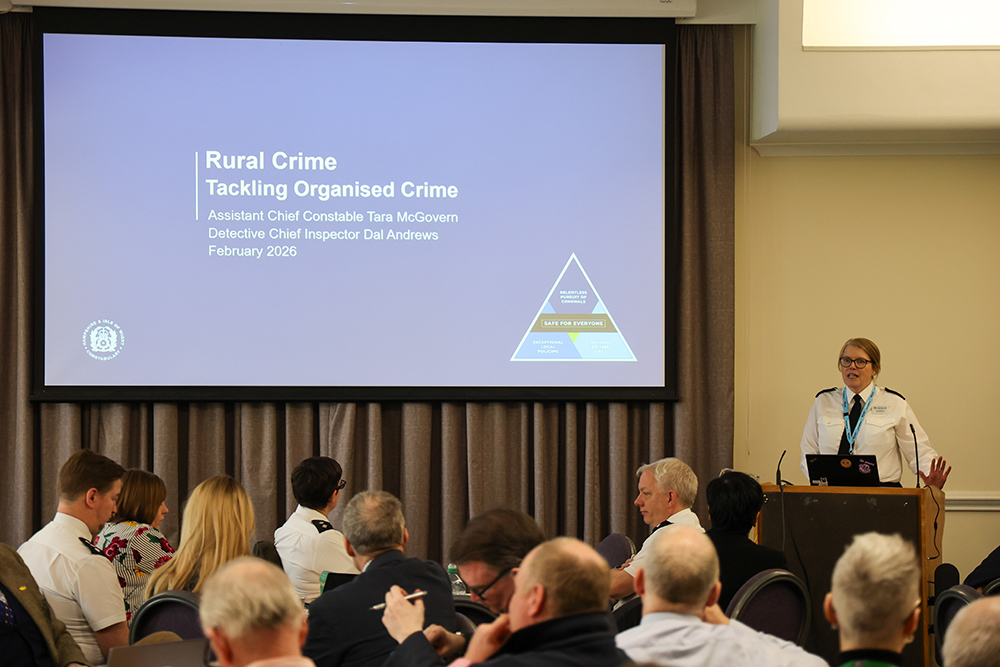
The task force brings together the long-established Country Watch team—experienced in rural and wildlife crime investigation, patrols and community engagement—and strengthens it with additional officers and an added proactive focus on serious organised and acquisitive rural crime.
The operational approach emphasises daily hotspot patrols, proactive vehicle stops, intelligence gathering, and targeted operations, delivered in coordination with neighbourhood teams, response colleagues, firearms, roads policing and partner agencies. Specialist assets such as mobile ANPR capability and drones support this work, and cross-border collaboration helps tackle travelling offenders.
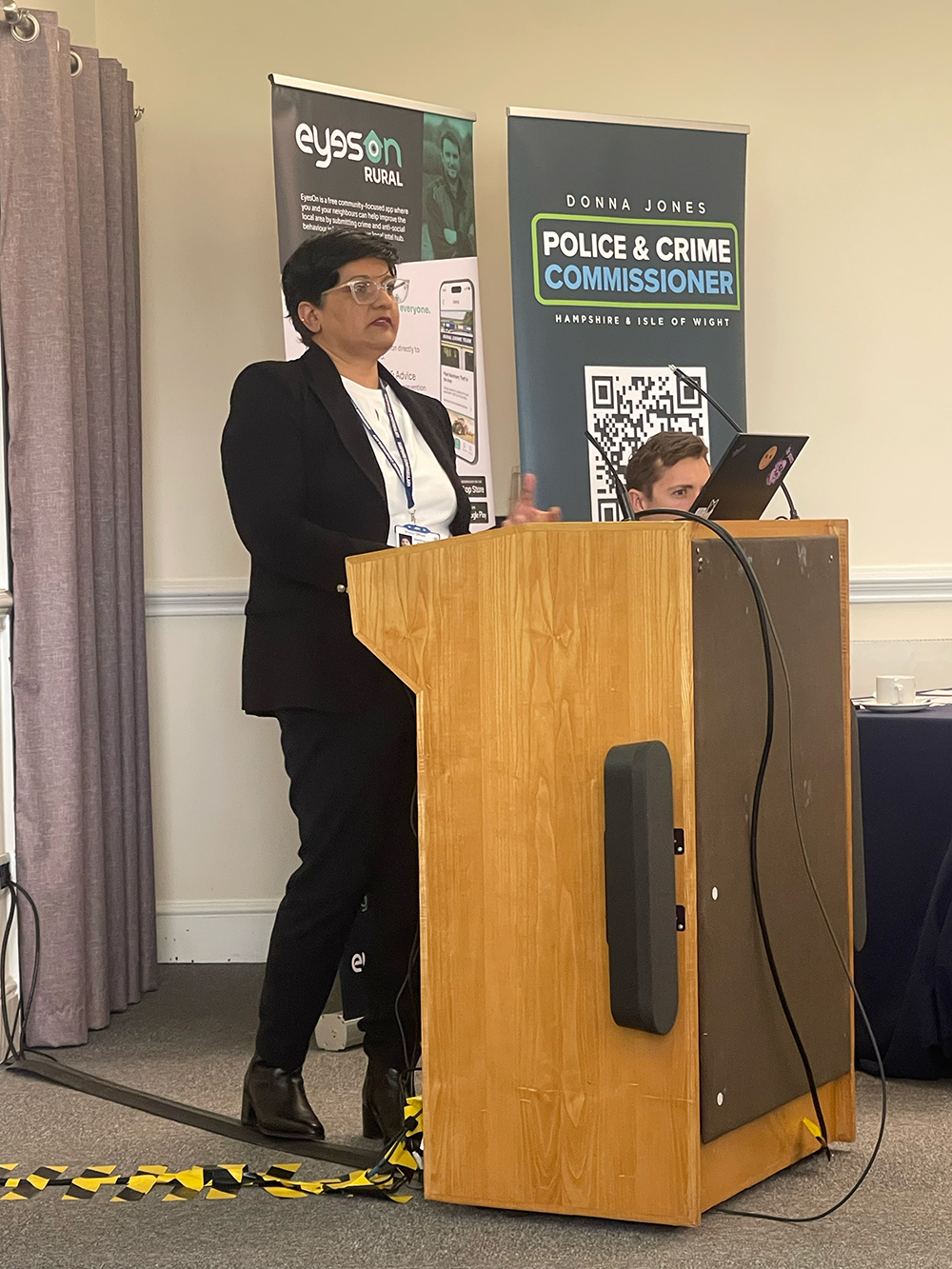
Task force updates have referenced significant recoveries of stolen goods, including figures in the region of £160,000 to £170,000 since the task force was set up, alongside examples of arrests and seizures linked to proactive activity. The work also includes site visits, warrants and intelligence-led patrols designed to make rural areas a hostile environment for organised offenders.
Firearms licensing, local policing and rural contactability
The Sparsholt programme was designed to cover the issues rural communities experience day-to-day, not only the strategic picture.
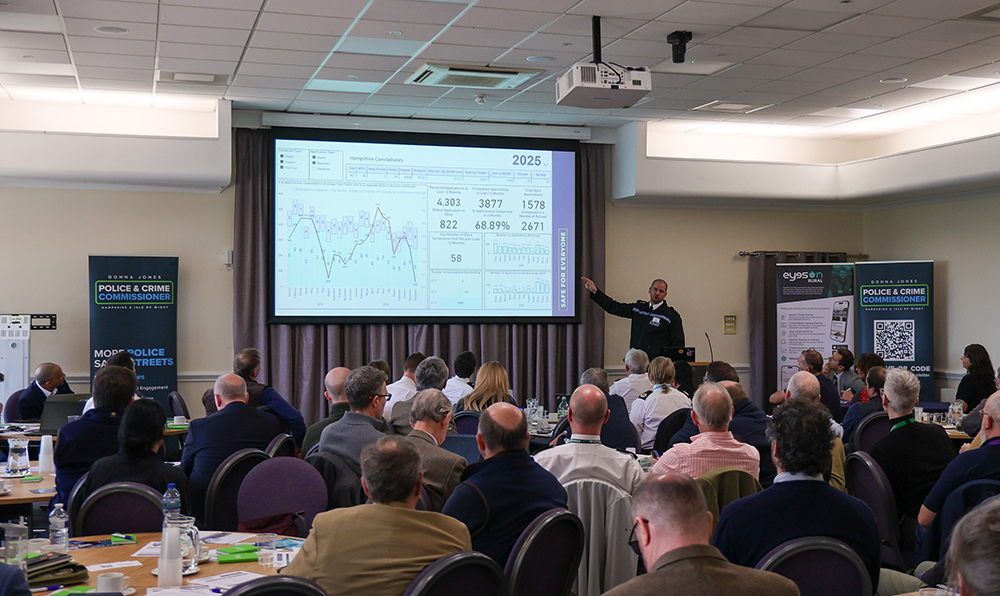
Chief Inspector Matt Gooding provided an update on changes relating to firearms licensing, reflecting the importance of clear, professional communication on a subject that is highly relevant in rural areas.
Targeting key rural threats: hare coursing, poaching and waste crime
Several rural threats have been consistently raised across Hampshire and the Isle of Wight.
Hare coursing remains a significant problem, often involving organised offenders operating across borders, with associated criminal damage to fields and intimidation directed at landowners. Rural policing updates have also highlighted links between hare coursing and other rural offending, including burglary and theft from farm buildings.
Poaching has also been a recurring concern, including fish poaching affecting chalk river environments and salmon stocks. Rural forums have referenced 197 reports of fish poaching in the 12 months to the end of September, representing a marked increase on the year before and highlighting the need for targeted activity.
Fly-tipping and organised waste offending continues to affect rural landowners and communities. Recent multi-agency enforcement activity has shown how a road-network approach can intercept offenders, check compliance and address unsafe or unlawful transport of waste. These operations bring together policing teams with partners such as local authorities and national agencies so that enforcement action can be taken quickly and in the right way.
Rural safety partnership: the Fire and Rescue Service and rural organisations
A key strength of the event was the way it brought in partners beyond policing.
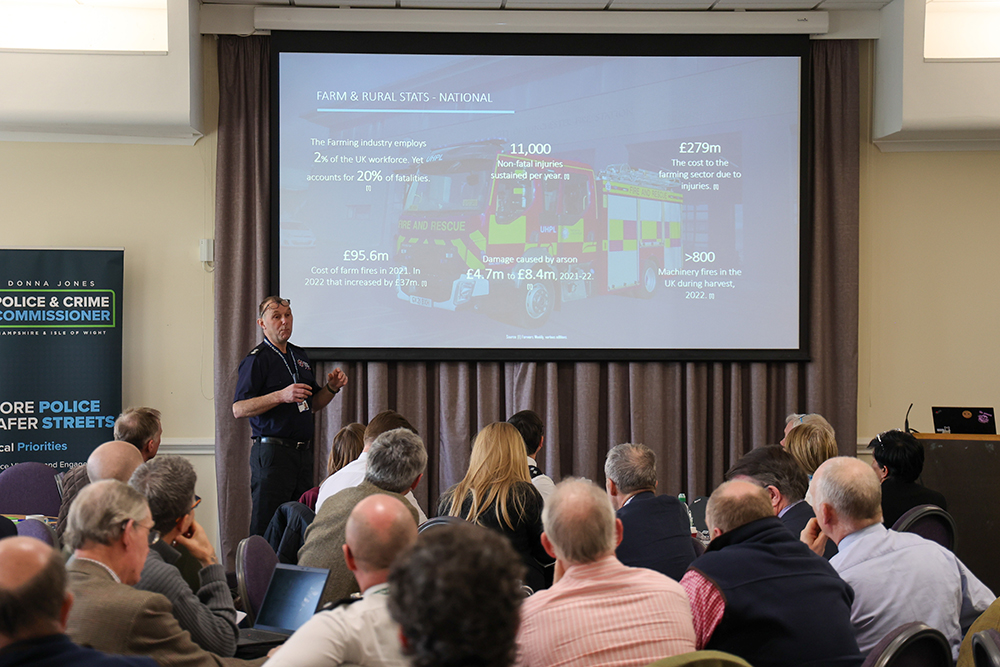
Matt Horne from Hampshire and Isle of Wight Fire and Rescue Service (HIOWFRS) spoke about rural safety and prevention, highlighting steps farm and landowners can take to reduce incidents and improve safety. Rural environments have unique risk factors, and prevention matters because geography can intensify consequences.
David West from the British Association for Shooting and Conservation (BASC) shared what the organisation is doing within rural communities.
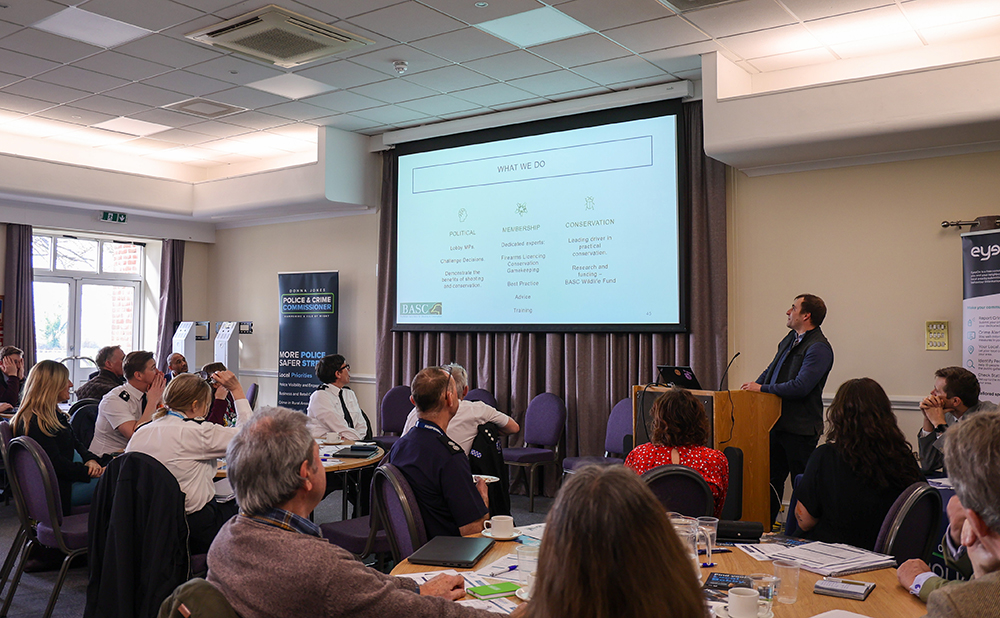
These partner contributions reinforced the wider point: rural safety is collective work. It is strengthened by consistent communication, shared awareness of risks, and practical preventative action.
EyesOn fits this partnership approach because it is not designed simply as a reporting form. It is built to support communication, engagement and intelligence sharing in a structured way.
Engagement and reassurance: visible days of action
Alongside enforcement, rural policing teams have continued to run community engagement days that place officers in rural hotspots, speaking directly with residents, farmers and rural businesses. These days are designed to increase visibility and encourage reporting. They also generate intelligence: multiple intelligence logs can be captured in a single day when officers are present in communities and residents have a clear opportunity to share what they have seen.
This emphasis on reporting is the same thread that runs through the launch of EyesOn. Policing teams have been clear that rural crime can go under-reported, and that smaller incidents can form part of a wider pattern. A stronger, simpler reporting route helps communities contribute to the intelligence picture consistently.
Keynote: Chief Constable Alexis Boon
Chief Constable Alexis Boon delivered the keynote address, outlining a continued focus on rural crime as a policing priority and the importance of building strong partnerships with rural communities. Listening to rural experience, shaping activity around local concerns, and maintaining visible, proactive policing all strengthen outcomes.
Panel discussion: rural issues, practical answers
Donna Jones led a panel discussion with Assistant Chief Constable Tara McGovern, Inspector Cath MacDonald and Lucy Charman, National Rural Crime Lead for the Country Land and Business Association (CLA). The panel took questions from the audience on rural crime challenges and how the police and partners are responding.
Lucy Charman welcomed the shift toward reporting routes that are designed around rural needs, saying:
“Previous methods of reporting rural crimes have been, at times, somewhat cumbersome. The introduction of something tailored to the needs of rural businesses and landowners, which makes reporting incidents easier and helps to forge closer links with police, is always going to be welcome.
Our message to rural communities, is that reporting incidents is essential.”
EyesOn: the centrepiece of the day and a UK-first rural app
Chief Inspector Marcus Cator’s deep dive into EyesOn was the centrepiece of the event. Using screenshots of the app and the backend system, he showed how EyesOn has been designed to improve rural reporting, communication and intelligence.
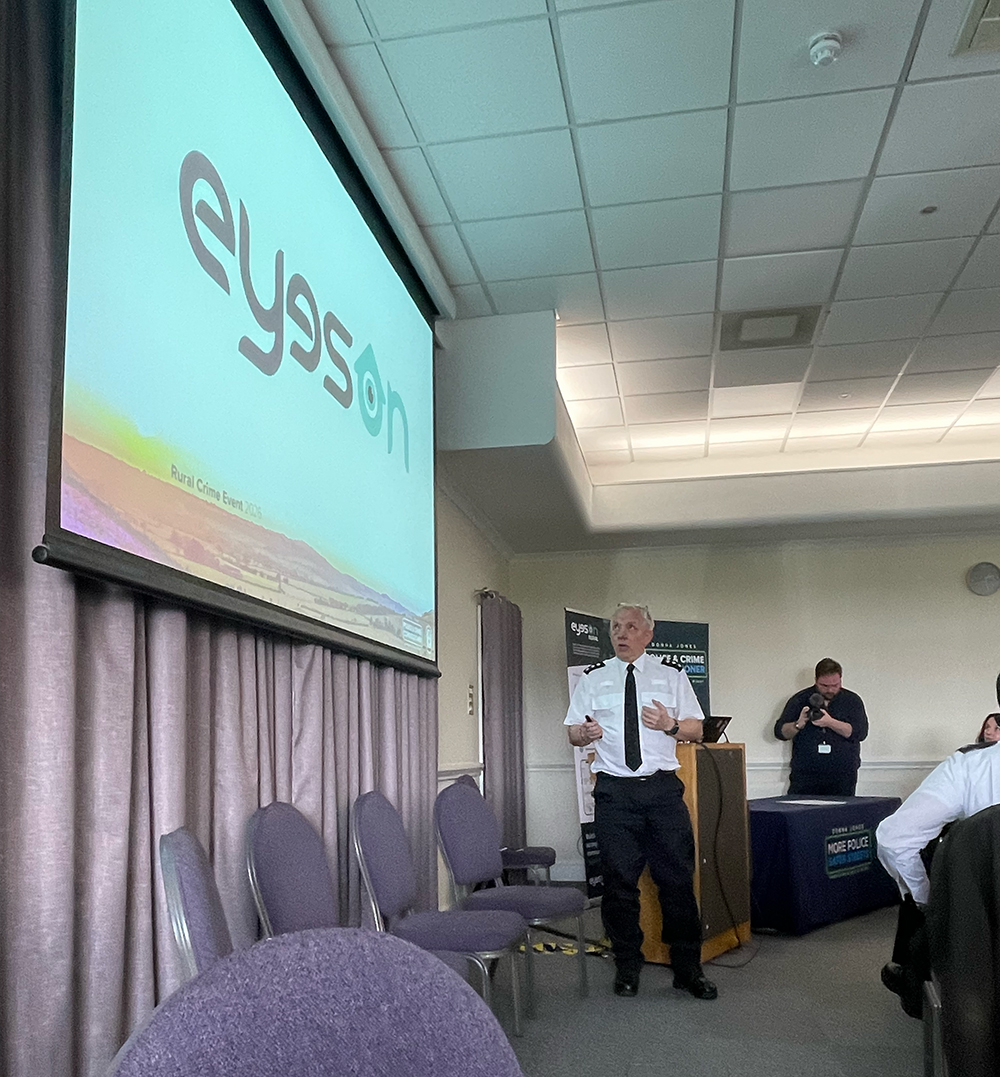
EyesOn has been described as the first rural application of its kind in the UK. It is AI-supported, using analytics to help support rural policing priorities. It also supports precise rural mapping by using what3words-style location referencing rather than relying solely on postcodes, which can be impractical across wide rural areas and remote locations.
EyesOn will be rolled out across Hampshire and the Isle of Wight thanks to funding from the PCC. The official plan states it will be free for approved users and is due to be fully operational in spring after a short trial with the constabulary’s Rural Crime Task Force and up to 1,000 users of the existing web platform used by the Hampshire Rural Crime Partnership. That existing platform has helped rural communities share information and report crime, but has been limited in access and in how information can be filtered and routed to police. EyesOn has been introduced to strengthen that pathway, improve usability and support a more consistent flow of structured information.
Donna Jones has been clear about the intent:
“I am delighted to be supporting and funding the EyesOn project, so that our rural communities can access it for free and share news, risks and concerns as well as images and CCTV footage of offences being committed and the damage left behind.”
Reporting routes and safety: the right tool, the right channel
EyesOn provides a digital route to file crime information in a police compliant format, with reports sent directly to the police Contact Management Centre (CMC). This supports consistency and usability for operational teams and improves the experience for rural users who want to report concerns quickly and clearly.
EyesOn does not replace emergency reporting. The app includes a triage process designed to confirm whether it is safe and appropriate to use. If users indicate a crime in progress, an emergency, or immediate risk, they are instructed to call 999 or 101 as appropriate.
The official messaging makes this clear:
“Users are being urged to continue using 999 to report crimes in progress or in an emergency. However, the improved line of communication from EyesOn between rural communities and police will ensure that officers can better understand local issues and the impact that Organised Crime has on these areas.”
Task force perspective: what EyesOn adds
Inspector Cath MacDonald, who heads the Rural Crime Task Force, described EyesOn as a tool that will strengthen rural policing by improving reporting, routing and the ability to identify trends. She said:
“We are excited about this app and the positive difference it will make to further strengthening policing in rural areas.
EyesOn gives police and the community a much more user-friendly interface, making it quicker and easier to report crimes and incidents, and then to get that information to the right local policing team.
The app’s analytics will help us to identify problems, trends and how best to target a police response, adding to the impact our Rural Crime Task Force are already having across Hampshire and the Isle of Wight.
We want to be in the right areas at the right times to target rural criminality, and this app will be another important tool helping us to do that.”
How EyesOn works in practice
EyesOn has been designed for the realities of rural reporting: incidents may happen far from a postcode, evidence may be held on a phone or a private CCTV system, and people often want to share information quickly without spending long periods on the phone. The app guides users through a structured set of questions so that key details are captured consistently, including what happened, when it happened, where it happened and what evidence is available. Location can be recorded precisely using what3words-style references, helping rural incidents be mapped accurately even where landmarks are limited.
Where safe and appropriate, users can attach supporting material such as photographs, vehicle details, and CCTV clips. Reports are submitted in a police compliant format and sent directly to the police Contact Management Centre (CMC). This improves the usability of what is received and supports onward routing to the right local policing team. If further clarification is needed, follow-up questions can be handled through the app, supporting continuity and reducing the risk that important information is lost or duplicated.
EyesOn also supports ongoing two-way engagement. Police can set up gated, invite-only chat rooms based on rural sector type, such as farming or landowners, enabling private discussion and information sharing with the relevant communities. This provides a controlled environment for updates on recurring issues, emerging patterns and prevention advice, alongside community-led intelligence that helps build a fuller picture.
In addition, trusted partners can share surveys through the platform, allowing users to respond anonymously. This feedback supports service improvement and helps ensure rural voices continue to shape local priorities. Users can also access localised statistics and trend information, supporting situational awareness and reinforcing the importance of consistent reporting. Together, these features strengthen day-to-day reporting and the wider relationship between rural communities and policing teams.
The benefits of EyesOn for rural communities
EyesOn has been designed to support practical rural needs, with features that make reporting and engagement simpler and more effective.
1) Report rural crime directly to police (CMC)
Users can submit structured reports directly to the police Contact Management Centre in a police compliant format.
2) Share images and CCTV footage
Rural users can share images and CCTV footage of offences and damage, supporting investigation and intelligence.
3) Precise rural mapping through what3words-style locations
What3words-style location use supports precise rural mapping where postcodes may be impractical.
4) Gated, invite-only chat rooms by rural sector
Police can set up invite-only chat rooms by sector type, such as farming or landowners, enabling private engagement and information sharing about the crime issues affecting those groups.
5) Rural crime alerts, news and advice
Users can receive updates and guidance shared by policing teams and trusted partners to support prevention and vigilance, including advice on emerging risks and how to protect property and assets.
6) Anonymous surveys from trusted partners
Administrators can upload surveys from trusted partners, allowing users to respond anonymously. This helps gather structured feedback and supports service improvement.
7) Localised statistics and trends
Users can view localised statistics and visualisations to support situational awareness and understand what is being reported in their area.
EyesOn also includes features that support confidential intelligence contribution where appropriate, and signposting to local authority reporting for public realm issues.
UKPAC administration and delivery partnership
EyesOn has been developed by UK Partners Against Crime (UKPAC) and is being rolled out across Hampshire and the Isle of Wight thanks to PCC funding. Within the EyesOn programme, UKPAC acts as the administrator, supporting the management and structure of the system as it scales across rural communities.
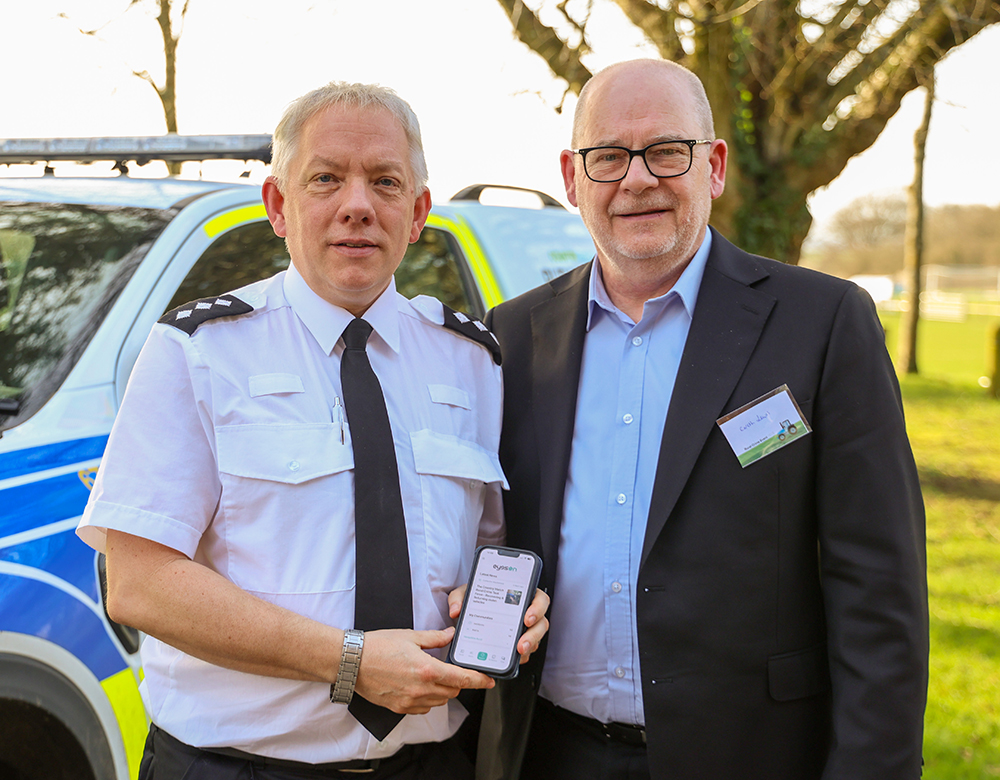
The official announcement also referenced UKPAC’s experience in retail reporting, noting that the tailored retail business app by SentrySIS used by UKPAC has led to 107 shoplifters being charged in Hampshire and the Isle of Wight and supported more than 55 years in custodial sentencing since it was launched by the PCC last June.
Gareth Lewis, Chairman of UKPAC, said:
“The launch of EyesOn in Hampshire and the Isle of Wight is a UK first and has been made possible thanks to the support, input and guidance from PCC Donna Jones and Hampshire and Isle of Wight Constabulary.
Developed in support of the National Rural Crime Strategy, this app will make our rural communities safer, bring together people living and working in our countryside areas, leaving them better connected and better supported.”
SentrySIS: technology, infrastructure and technical support
EyesOn is underpinned by robust technology, reliable infrastructure and ongoing technical support. SentrySIS provides technology and infrastructure support, helping ensure the platform remains resilient and scalable as adoption grows across Hampshire and the Isle of Wight. This includes platform reliability, updates, and technical support pathways.
Ceremonial signing: a shared commitment
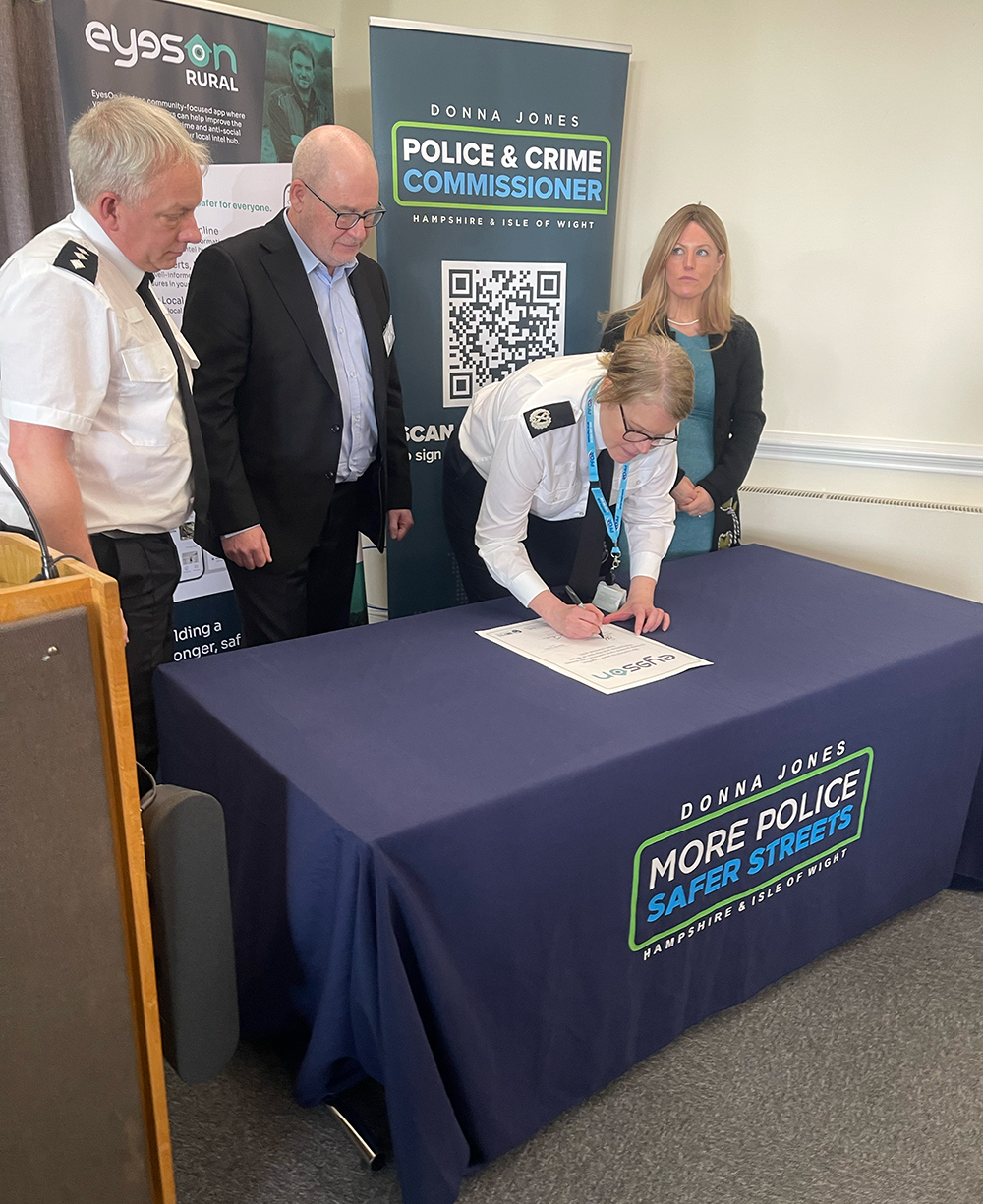
After the EyesOn demonstration, the event moved to a ceremonial signing involving PCC Donna Jones, Assistant Chief Constable Tara McGovern, Chief Inspector Marcus Cator and Gareth Lewis from UKPAC. The signing marked a commitment to rollout and delivery, and reinforced that EyesOn is being implemented through partnership working between the PCC’s office, policing leadership and delivery partners.
Rollout and transition: what happens next
The official plan describes EyesOn as due to be fully operational in spring after a short trial period with the Rural Crime Task Force and up to 1,000 users from the existing Hampshire Rural Crime Partnership web platform.
Alongside that rollout plan, the operational transition includes the existing DISC system being disbanded from 1 March 2026, with EyesOn taking over as the primary platform for rural crime reporting and rural community engagement through the spring rollout period.
What rural users can expect during rollout
EyesOn will be introduced in a controlled way so that access can be approved, communities can be set up correctly, and policing teams can ensure the right information is reaching the right routes. During the initial phase, existing users of the current web platform will be supported to move across, and sector-based chat rooms will be configured so that communities can engage in a structured and relevant way. Users will be able to submit reports with clear location details, attach images or CCTV where available, and receive updates and guidance through the app. As the rollout progresses through spring, the focus will be on building consistent reporting habits, strengthening intelligence, and ensuring rural communities across both counties have a clear, modern route to share concerns and support policing activity.
Closing remarks: Donna Jones’ message and a call to action
The Rural Crime Event at Sparsholt College reflected a consistent strategy: invest in rural policing capability, increase proactive disruption of organised offenders, strengthen partnerships, and introduce tools that make reporting and engagement practical for rural life.
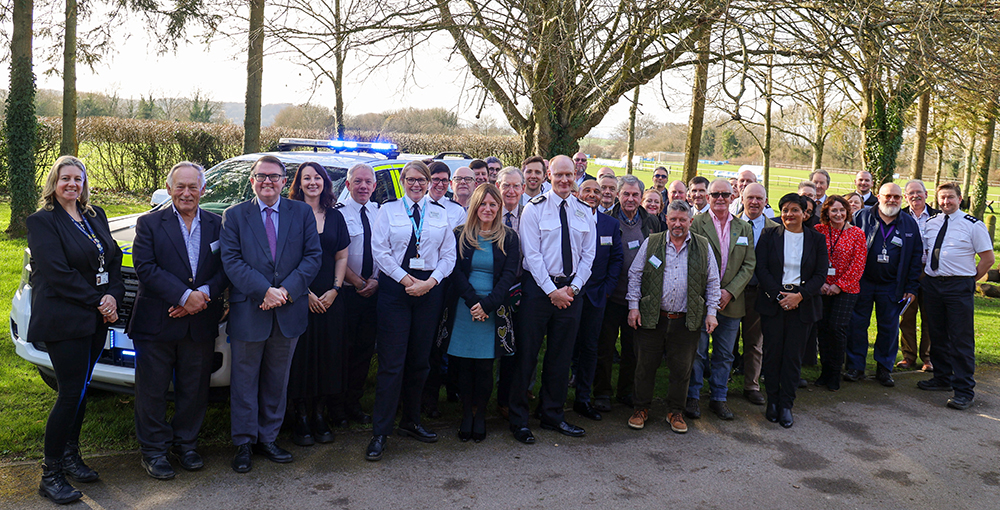
Donna Jones closed the day by reaffirming that her office and Hampshire and Isle of Wight Constabulary are acting on what rural communities have been asking for, and that organised offenders should expect continued focus and enforcement.

Her message remains clear:
“My message to the criminal gangs moving across our wonderful two counties is that we’ve got our EyesOn you, and we are coming after you.”
As EyesOn rolls out across spring 2026, rural residents and businesses are encouraged to register where eligible, use the reporting tools appropriately, and continue sharing information that supports proactive rural policing.
For more information on EyesOn, visit www.eyesonapp.com.